As England prepares to battle Argentina for a spot in the World Cup final, the tension between fans and nations is palpable.
Fans Unite in a Tense Atmosphere
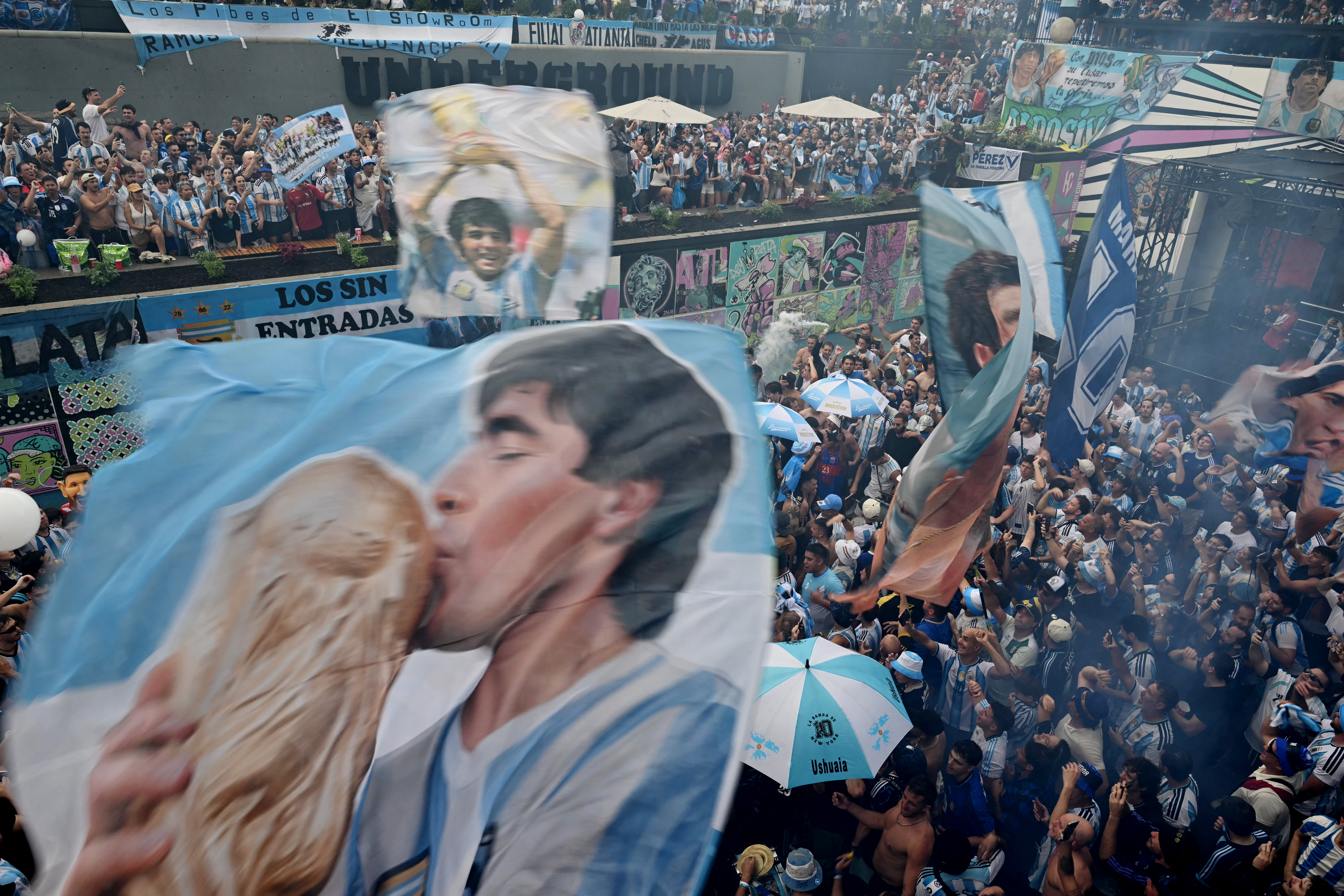
In a vibrant bar in Atlanta, England and Argentina fans are coming together, albeit with underlying tensions. As fans sing karaoke late into the night, the atmosphere is electric—a mix of camaraderie and anticipation that rivals the football match itself. The stakes? A coveted place in the World Cup final.
The scene is charged: Argentine supporters wearing shirts emblazoned with “Malvinas belongs to Argentina” revel in the energy, while an English fan's heated exchange outside hints at the historical hostilities that linger. Such rivalries aren’t just about the present; they’re steeped in a history that informs every cheer and jeer. Both teams' coaches, Thomas Tuchel and Lionel Scaloni, have attempted to downplay the significance, insisting that “it’s only a football match.” Yet, beneath the surface, emotions can run high, unfolding a classic tension that transcends the sport itself.
A Night of Karaoke and Tension
As the night wore on, police were strategically positioned outside to preempt any skirmishes, but the atmosphere inside the bar often stayed surprisingly jovial. When the English fans kicked things off with “Vindaloo” and a cheeky twist on old classics, the karaoke machine turned into a battleground of friendly competition, with laughter punctuating every off-key note. The shared enjoyment often masked the underlying aggressive tensions. Even amidst raucous choruses of “Three Lions,” moments of potential confrontation surfaced—a fan gestured rudely, and a scuffle seemed imminent before it grudgingly subsided. The camaraderie was genuine, yet strikingly fragile, highlighting the complex emotions football can evoke.
Unexpected Unity Through Song
As the warbled notes of “Wonderwall” filled the air, an unexpected unity emerged. Fans from both sides joined for Queen's “We Will Rock You,” standing shoulder to shoulder, united momentarily by the iconic anthem. It revealed the spirit of football—this isn’t merely about competition; it embodies shared passion and cultural exchange. Such moments are rare in the landscape of sports rivalries; they remind us of our commonality amidst division. Music became a bond, however fleeting, that broke down some of the barriers created by history and rivalry.
Stars Shine on the Pitch
On the pitch, the tournament hasn't disappointed. Stars like Jude Bellingham, Harry Kane, and Lionel Messi have dazzled, solidifying their statuses as top talents. Fans eagerly point out their prowess, as each player carries the dreams of an entire nation. Despite the contentious history between England and Argentina, both teams have displayed immense skill and determination. Tuchel remarked on the collective focus of the superstars this tournament, highlighting a commitment to their national causes that resonates with fans watching around the globe. What does this mean for football? It underscores the potential for lineage in the sport, as these players carve their names into the annals of history.
The Human Element of Global Events
A small, yet meaningful interaction unfolded outside the bar—an engaging conversation with a cab driver from Atlanta, eager to explore more of the world. This is the part most people overlook: the personal stories interwoven with the spectacle of a global event. Such moments emphasize how sports can serve as a catalyst for human connection, even amidst longstanding rivalries, underscoring the notion that at the heart of competition lies our shared humanity.
Warmth Amidst Rivalry
As I reflect on my time in Atlanta, the warmth of the city contrasts sharply with the cold rivalry that fuels the football match. The bittersweet farewell to Kansas City lingers, but this clash offers the chance for memorable interactions against the backdrop of global football enthusiasm. The comfort of shared culture, the joy of friendly competition—all are layered within this historic showdown.
Embracing Conflict and Camaraderie
As we gear up for the match, the duality of conflict and camaraderie, history and hope, epitomizes what makes football a universal language. What happens on the pitch may be significant, but the shared experiences around it are what truly resonate. The night is more than a sporting event; it’s about people coming together, a beautiful chaos where rivalry coexists with connection. What this means for you, if you're working in this space, is that football’s true power lies in its ability to bring diverse voices into a single discourse—however chaotic it may be.
Future Perspectives on Rivalry and Unity
As the echoes of the match linger in our minds, the implications of such gatherings extend beyond mere entertainment. They underscore the role sports play in bridging divides, showcasing our ability to find common ground amidst differences. The future of sporting events, especially at this scale, will likely see a continua of these dynamics—communities straddling the line between competition and camaraderie, history and new beginnings. As rivalries continue to shape the narrative, the potential for unity through shared experiences remains brighter than the conflicts that often dominate the headlines.



Discussion
Sign in to join the discussion.