Sprite’s NBA partnership returns after 11 years, testing how the brand can connect its basketball history with fans across today’s fragmented media landscape.

Sprite’s NBA return is a test of how sponsorship works now
Sprite’s comeback as the NBA’s global soft drink partner revives a relationship with deep roots. The more interesting question is whether the brand can make that history matter in a media environment where a single campaign can’t control the conversation.

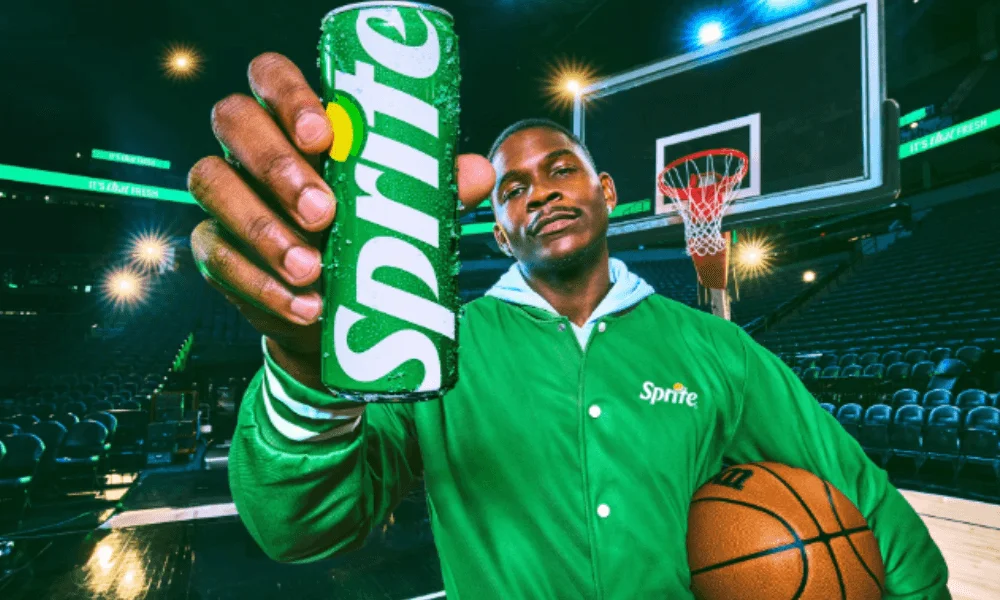
Image credit: Coca-Cola
Sprite first worked with the NBA in 1986 and became its official soft drink in 1994, holding that league-wide role until 2015. The timing of the original deal mattered: the brand was defining a new identity amid the sports drink boom and another round of the cola wars. Its “Obey Your Thirst” campaign cut through the noise with irreverent humor and a simple pitch: this lemon-lime drink is refreshing. For a Coca-Cola brand, that outsider posture was a useful distinction.
The fit with basketball went beyond the league’s biggest stage. Sprite’s youthful energy and playful creative stood apart from the earnest, oversized tone common in sports marketing, while its feel for basketball culture helped it leave a mark. The brand never fully disappeared: last season, it still had sponsorship deals with 17 NBA teams.
Now the league-wide partnership is back. In March, after 11 years away, The Coca-Cola Company confirmed a multi-season global deal with the NBA, replacing PepsiCo’s Mountain Dew and Starry. The new campaign, “Never Stop Refreshing The Game,” launched ahead of the 2026/27 season and will run across 25 markets.
“I’m super proud and excited that Sprite is back,” says Mickael Vinet, Coca-Cola’s vice president of global sports, music, entertainment partnerships and marketing. “And not only would I say it’s back in basketball globally, but I truly believe it is here to stay.”
For Vinet, the reunion is personal as well as commercial. He has spent 26 years at Coca-Cola, starting as an intern on the sports and entertainment team in France. Sprite’s NBA work featured prominently in his early career, and the return was among the first partnership opportunities he encountered after taking on his current role in 2025. He says it has created excitement around connecting fans through sport, music, fashion and the culture surrounding them.
That ambition now has to work across a more fragmented media system. Sprite no longer has “one claim and one advertisement” to carry the partnership; its team has to bring the idea to life across platforms and markets. The history gives the brand a strong starting point. It doesn’t guarantee that today’s fans will respond to the same playbook.
Basketball’s role inside Coca-Cola
The NBA deal also clarifies what Sprite is meant to represent within Coca-Cola’s wider portfolio. Vinet compares the ambition to Coke’s relationship with football: “On Brand Coke, we are very connected with the Olympic movement, with football. And I think Sprite and basketball should be what Coke is around football. I think that’s a simple way to visualise the ambition.”
Vinet sees a natural fit between Sprite and basketball’s audience, but he says the campaign still needs the right insight to turn that affinity into a productive commercial relationship. That distinction matters. A familiar logo on a court can buy attention; it takes relevant work to earn a place in how fans talk about the sport.
Sprite has already started rebuilding its basketball presence through individual team deals and an endorsement partnership with Minnesota Timberwolves guard Anthony Edwards. In 2024, Edwards helped bring back “Obey Your Thirst.” One commercial borrows from a mid-1990s ad featuring Grant Hill: Edwards dunks while a fan watches, then drinks Sprite. The fan tries to copy the dunk and fails. Hill’s voiceover makes the joke explicit: “You want to hoop like Anthony Edwards? Practice. You want a refreshing drink? Obey your thirst.”
The spot keeps the old campaign’s modest promise intact. Sprite can refresh you; it can’t make you an NBA player. That restraint gives the nostalgia a point, rather than asking a familiar slogan to do all the work.
Anthony Edwards now shares the roster with Denver Nuggets star Nikola Jokić. The three-time MVP appeared in a Sprite ad released in October, delivering dry standup from a comedy-club stage to a largely silent room. The closing line reads, “Jokes aside, welcome Joker.” The humor is spare, and less dependent on looking back.
Vinet says the two players bring different personalities and career paths, but each has an edge the brand can draw on. He wants them to contribute their stories and views, not simply appear as ambassadors. Jokić’s presence also reflects how much the NBA has changed: the Serbian center is 31, and 125 overseas players were listed on opening-week rosters for 2026/27. International talent was already part of the league by 2015; the achievements of players such as Jokić have since made the NBA’s global identity harder to miss.
That calls for a broader strategy. The NBA’s annual slate of regular-season games outside North America begins in early November with the Mexico City Game, then moves to Paris and Manchester in January. The league has also made its European ambitions public. Sprite has added another foothold through a multi-season partnership with Euroleague Basketball. After its debut at last season’s Final Four in Athens, Sprite branding will appear on courts and in arenas during 2026/27, alongside plans to engage with European basketball through music, fashion and fandom.
Vinet calls the international work a “wonderful challenge.” Live events can put the campaign in front of fans outside the US, while content can help make a global sponsorship feel locally relevant. The numbers and plans show the scale of the opportunity; they don’t yet tell us how much of that activity will feel distinct from market to market.
Letting creators shape the campaign
Sprite’s earlier basketball marketing drew on pop culture, from its bold 1990s campaigns to Miles Thirst, the hip-hop action-figure mascot that appeared alongside a young LeBron James in the mid-2000s. Vinet’s view of the brand’s role has shifted with the media environment: “The role of the brand is not just to sponsor and to be visible. It’s to be a catalyst for this creativity and self-expression.”
That means bringing creators into the work early. Vinet says Coca-Cola wants them involved in making the content, rather than being handed finished material at the end of the process. He’s candid that the company is still learning: some ideas won’t work, and the team will have to adjust.
Coca-Cola is also drawing on experience from the FIFA World Cup, where it used technology and other tools to track fan reactions in real time. Vinet says that information can help the company communicate in a more personal, responsive way. Faster approvals and some tolerance for risk are part of the bargain; the technology’s value, he argues, lies in helping brands talk with fans in the moment rather than simply broadcast at them.
Turning the sponsorship into fan activity
For a consumer goods brand, the campaign has to connect marketing with the product itself. Sprite plans to do that through several routes: QR codes on promotional cans will unlock prizes such as VIP courtside tickets, Wilson game balls and exclusive merchandise. In the US, the brand will be part of game-day food delivery offers. It will also appear in NBA 2K, sponsoring in-game power-ups and other items.
Vinet says athletes can help create content for use across markets, while local teams will have room to make material that reflects how fans in their regions follow basketball. The Euroleague partnership extends that approach into parts of central and eastern Europe and the Mediterranean.
In South Asia, where Vinet says streetball is especially popular, Sprite plans to support neighborhood court renovations. The “Hoops of Refreshment” program will also reach other markets with murals and events celebrating local basketball culture.
Keeping those activations consistent across countries and platforms will be demanding. Sprite has the history to make its return feel familiar, but Vinet says the brand wants to build on that legacy in a new way. The test is whether the campaign can make a global sponsorship feel close to the basketball communities it wants to reach.
 Euroleague confirms franchise plans: What now for its NBA grand alliance?
 Coca-Cola and NBA reunite to make Sprite official global soft drink
“Year two” is already shaping the plan. Some ideas take longer and need preparation now; others need to be tested during the first year so the team can learn, adjust and build on what works. That long view is the point: a sponsorship can’t reach its next stage if its partners wait until the first year is over to start thinking about it.
SportsPro+ brings together richer content, in-depth data and exclusive community benefits for people working across the global sports industry. Discover more here.

Discussion
Sign in to join the discussion.