Shakhtar’s European campaign and DTEK’s repair crews offer Ukrainians a shared source of resilience as attacks continue to disrupt power.
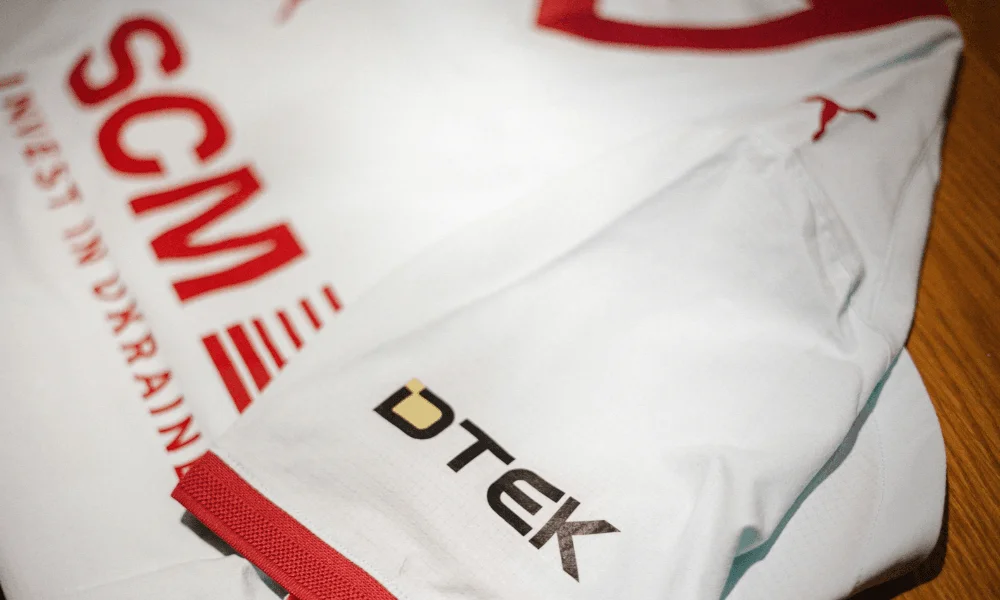
For Shakhtar Donetsk, keeping a European football campaign alive and helping Ukrainians stay connected are part of the same effort. The club’s matches offer fans a respite from the war, while sleeve sponsor DTEK works to keep the electricity on so they can watch. The link is practical as well as symbolic: a match can briefly redirect attention, but only if a household has power, heat and a working screen.
This season, Shakhtar fielded the youngest squad in the Champions League and beat AEK Athens 3-1 at Stamford Bridge, becoming the first Ukrainian club to win on English soil. Fixtures against Sporting and Fenerbahçe in London and Real Madrid in January remain ahead. The schedule has the familiar pressures of elite football—travel, preparation and results—with an additional constraint few clubs face. The night before travelling to London, an air raid alarm stopped a league match in Rivne, sending players to the stadium shelter.
Shakhtar CEO Serhii Palkin says the players know their role reaches beyond the pitch. For supporters finishing work and turning on a match, the game can provide a couple of hours focused on something else. That pause has real value, though it doesn't remove the conditions people return to when the final whistle comes. In many households, even watching depends on whether electricity and heating are available.
Repair work under repeated attack
Russia has targeted Ukraine’s energy system through five winters, striking power stations, substations and grids. Damage at any point can affect the wider chain that moves electricity from generation to customers. DTEK crews return to damaged sites to restore service, sometimes repairing the same facilities repeatedly. The work is therefore less like a single reconstruction project than a cycle of repair under continuing threat.
Ivan Geliukh, DTEK’s head of strategy and chairman of DTEK Grids, said Russia carried out around 4,500 attacks on the country’s energy system last year. Over four winters, DTEK’s thermal power plants have been hit repeatedly, and 484 colleagues have died, either while working or defending Ukraine. Those figures describe both the scale of the damage and the human cost behind the service customers may take for granted when it is available.
Since 2022, crews have restored electricity to Ukrainian homes more than 56 million times. That total speaks to the frequency of disruption as much as the effort to repair it: restoration is an ongoing task, not a guarantee that a location will remain unaffected. Palkin thanked DTEK’s workers for their effort and sacrifice, describing the club and company as connected in their support for the country. Both belong to the SCM group founded by Rinat Akhmetov.
The relationship also has roots in Donetsk. Shakhtar’s name means “miner,” and many DTEK employees come from families with generations of work in the Donbas mines and power plants. That shared history gives the sponsorship a local meaning beyond the logo itself. For those employees, seeing DTEK’s name on the club’s sleeve at Stamford Bridge carries particular weight: the team is playing abroad, while the company’s crews are working at home under attack.
Designing for recovery
The repeated damage has shaped DTEK’s thinking about the energy system Ukraine needs. Geliukh’s view is that no infrastructure can be made entirely safe from attack. Physical protection matters, but it can only address part of the problem. The other part is whether operators can keep service running through damage and restore it quickly when equipment fails.
That points to a more decentralised grid, with power sources distributed across the country so damage in one place is less likely to disable the whole system. The idea is straightforward; putting it into practice means changing how energy is generated, moved and managed. Automation and smart grids can also help operators isolate faults and reconnect customers whose service was unaffected by a strike. This is more significant than it looks: the ability to limit an outage can matter as much as the ability to rebuild after one.
DTEK says it is applying those lessons during the war. The company has built Eastern Europe’s largest wind farm and Ukraine’s largest battery storage systems. These projects show the direction of its work, though they don't erase the immediate need to repair damaged infrastructure. Geliukh sees the experience as relevant to other European countries, even though it has been learned under conditions no country would choose. Similar systems typically have to balance reliability, flexibility and the difficulty of protecting physical assets; Ukraine’s experience makes those trade-offs unusually visible.
What resilience means beyond the grid
Shakhtar, forced from its home in Donetsk more than a decade ago, continues to represent Ukraine in European competition. Geliukh draws a parallel between the club’s persistence and the energy crews’ daily work: both keep going while millions of people depend on them. The comparison has limits—football and electricity are different kinds of service—but it captures how continuity can matter when ordinary routines have been repeatedly interrupted.
If you're working in this space, the practical question is how to design systems that can keep serving people when parts of them are damaged. A distributed grid, automated fault response and storage may help answer it, but the account here also makes clear that resilience depends on people returning to repair sites and restore service. (And this is the part most people overlook.) Infrastructure plans don't operate on their own.
This winter, a Shakhtar match can give fans a reason to switch on the television. That small routine can offer a brief break from the war. Whether the screen lights up depends in part on DTEK’s crews—and on an energy system built to recover when the next strike comes. No guarantee. Just a daily effort to keep the connection working.

Discussion
Sign in to join the discussion.